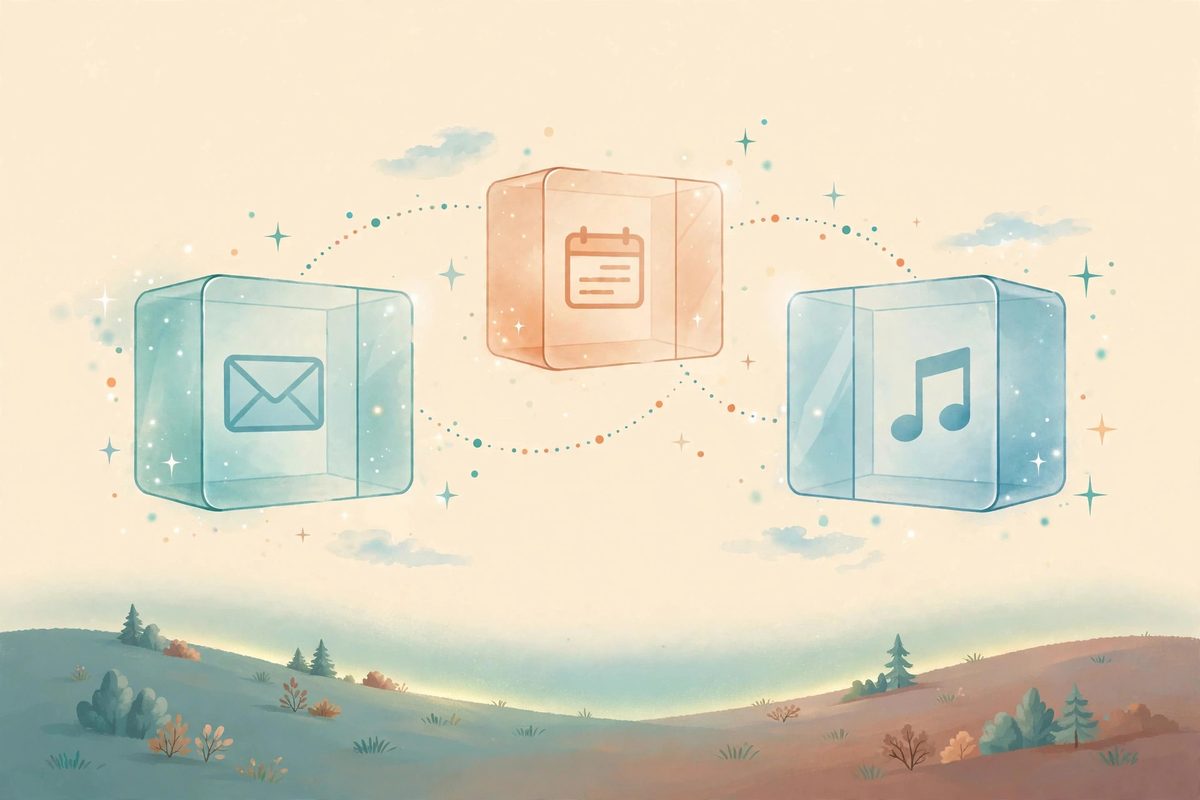
Meta announced Spaces for its Muse assistant on 6 November 2026, a feature that turns a plain-language description into a custom, persistent workspace inside the app. Tell Muse what you need — a holiday gift tracker, a trip planner, a client hub for your freelance work — and it builds it for you, then keeps it updated from the apps you connect. It is the second new Muse feature in two days, after Muse Voice arrived on 5 November, and it is Meta's clearest move yet toward an assistant that organizes your life instead of just answering your questions.
Mark Zuckerberg, posting about the feature on X the same day, put it simply: "tell Muse what you need and it builds it. I've made a BBQ game, an event tracker, and a home control dashboard. Excited to see what you build."
What a Space actually is
A Space is a custom experience you create inside Muse by describing an idea. Meta's announcement frames it as the answer to the half-finished idea sitting in your notes app: instead of a chat thread that scrolls away, you get a dedicated surface that stays where you put it and keeps working in the background.
The build process is conversational. Your first description is only a starting point — as you use the Space, you keep adjusting it with Muse, adding what is missing, trying a new look, or changing how it works. You choose where each Space lives: pinned to the sidebar, promoted into the main tabs, hidden when you do not need it, or scheduled to appear at certain times. Meta's own example is a weekly planner up front during the workweek, swapped for weekend plans on Saturday.
What you can build
Meta's announcement lists ten example Spaces, and the range is the point — from chores to creative work:
- A shopping hub that brings holiday and birthday gift ideas, wishlists from Instagram saves, and your Marketplace listings and buyer messages into one view
- A school dashboard that finds the events relevant to your kids in school emails and adds them to your calendar
- A music tracker for the artists you love, with new releases and upcoming shows
- A wedding planner with your RSVP list, vendor invoices, and to-dos
- A trivia game that quizzes you on your favorite movies, music, or sports team
- A podcast studio to keep your episode ideas, research, and scripts together
- An order tracker for your small business, with new orders, customer messages, and what needs to ship today
- A client hub for your freelance work, with projects, deadlines, and invoices
- A trip planner with your flights, hotel, reservations, and a day-by-day itinerary
- A daily word game or a planning board for your next DIY project
For creators, three of those stand out immediately: the podcast studio, the client hub, and the order tracker are exactly the kind of small, personal tools that normally need a spreadsheet, a Notion setup, or a paid app — and here the pitch is that you describe them and they exist.
A Space that keeps up with you
The part that separates Spaces from a static template is the live connection. Connect the apps you use, and your Spaces keep themselves up to date in the background, so new concert dates, price changes, or savings progress show up without you having to ask. The Verge reports the connected apps include Gmail, Google Calendar, OpenTable, and Notion. You can check things off, add notes, and make edits right in your Space, and everything is there when you return.
That background updating is also where the sensible questions start. Meta says Spaces are "personal from the start," but its announcement does not spell out the detailed data-access, retention, and processing arrangements for every connected service. If you link your email and calendar to a Space, you are trusting Muse with the contents of both — worth knowing before you build a client hub out of your inbox.
The model upgrade underneath
Spaces did not arrive alone. In the same announcement, Meta said it is rolling out specialized versions of its models to Muse, trained with learnings from Muse Wonder, its frontier model family launched in October. Meta AI Research published the details the same day: the new models bring two capabilities from Wonder to everyday users of Muse and Meta AI.
- Active Memory — the assistant retains relevant information across conversations, distinguishes permanent details from temporary notes, and recognizes when earlier context becomes relevant again. Meta reports the current Muse model is 2.4x less likely to forget information critical to a user's goals, scoring 90% on its Active Memory evaluation against 76% for the previous model.
- Active Focus — when a task hits an unexpected obstacle, the model keeps working toward the goal: trying another path, recovering, or asking a clarifying question instead of stalling. Meta reports a 67% improvement in completing everyday tasks when something goes wrong.
Meta also reports the current Muse model scores 47% on its internal Personal Superintelligence Index, up from 38% for the previous model. Every one of these figures is Meta's own, measured on Meta's own evaluations, with no independent verification published — treat them as the company's claims about its own tests, not as settled results.
What Spaces can't do yet
Two limits are worth stating plainly. First, sharing is not available yet: Meta says it is "exploring ways for you to share your spaces with others to build a more collaborative experience," which means every Space is a solo workspace for now. Second, Spaces are not standalone apps: Meta has announced no way to export a Space as an independently hosted tool or publish it through an app store. What you build lives inside Muse.
Availability is also narrower than the announcement's wording suggests at first glance. Meta says Spaces is available "everywhere Muse is available" from today — and Muse itself launched in the US in September, reaching 10 million users in the US and Canada in under two months, according to Zuckerberg's remarks on Meta's October earnings call as reported by TechCrunch. If Muse has not launched where you are, Spaces has not either.
Why this matters
Spaces is Meta's answer to a race that is now clearly underway: every major lab is turning its assistant into something that does ongoing work, not just single-turn answers. TechCrunch notes the competition includes OpenAI's Dots and xAI's Grokbot, and this is the second Muse feature in a week after Muse Voice, which added real-time voice conversations with an animated avatar on 5 November.
For readers of this blog, the practical question is simpler than the strategy: can you describe a tool you actually need — a client tracker, a content calendar, a small-business order board — and get something usable back, without writing code or wiring up a spreadsheet? Meta's examples say yes. Whether the Spaces it builds are genuinely useful or just tidy-looking demos is something only hands-on use will show, and that is the test that matters now that the feature is live.
Sources and classification
Classification: Official Announcement (Meta, 6 November 2026). Launch facts and examples are from Meta's announcement; connected-app details are from The Verge's reporting; the specialized-model figures are Meta's own, with no independent verification published yet. Checked 7 November 2026.
- Meta Newsroom, "Design the Muse App, Just for You" (official announcement, 6 November 2026): https://about.fb.com/news/2026/11/introducing-spaces-customize-muse-app/
- Meta AI Research, "Bringing Specialized Models to Muse and Meta AI" (6 November 2026): https://research.meta.ai/blog/specialized-models-for-muse-and-metaai
- TechCrunch, "Meta introduces Spaces, a new way to collaborate with your Muse agent" (6 November 2026): https://techcrunch.com/2026/11/06/meta-introduces-spaces-a-new-way-to-collaborate-with-your-muse-agent/
- Xenospectrum, "Meta's Muse Adds 'Spaces,' Custom Screens for Schedules, Orders and More" (6 November 2026) — connected apps (Gmail, Google Calendar, OpenTable, Notion) as reported from The Verge's coverage, and availability details: https://xenospectrum.com/en/meta-muse-spaces-custom-workspaces/
- Digital Trends, "Meta now lets you build your own mini-app experiences called spaces in the Muse app" (6 November 2026) — launch context and Zuckerberg's Spaces examples: https://www.digitaltrends.com/phones/metas-now-lets-you-build-custom-mini-app-experiences-in-the-muse-app/